Yes, if the data is accurate, permissioned, and tied to a result your business actually values. Connecting a qualified lead or completed sale can help Google Ads learn more than a basic form submission can. However, do not send customer data just because a new connector makes it easier. Set the rules first.
This decision matters now. On September 10, Google announced new measurement capabilities, including Data Manager integrations for Google Analytics and Display & Video 360, enhanced conversions in those products, a universal Data Manager API, new diagnostics, and a Data Strength Uplift Metric. The tools can make data handoffs simpler. They cannot decide which sale was profitable or which lead was worth a follow-up.
Start with the result your sales team trusts
What should the campaign produce? A booked service call? An approved quote? A store purchase? A completed enrollment? Pick one result that matters and write down the definition.
A “qualified lead” cannot mean one thing to the sales manager and another thing in the ad account. Set a few plain rules:
- Which event counts as a real conversion?
- When is that result final enough to send back?
- Does every location or salesperson use the same definition?
- Can the team correct a duplicate, cancellation, or bad lead?
If those answers are fuzzy, fix the process before connecting the platform. Faster bad data is still bad data.
Send less data, but make it cleaner
Google describes tools that can match first-party customer information and connect events across systems. That is not permission to upload every field in your customer file. Use only the data needed for the approved measurement job.
Confirm how consent was collected, what your privacy notice says, who can access the connection, how long records are retained, and which platform rules apply. A hashed identifier is still part of a customer-data workflow. Your privacy, legal, or compliance owner should approve the setup, especially in financial, health, employment, or other regulated work.
Need a giant data warehouse to begin? No. A smaller business can start with one clean conversion event and a reliable handoff. The goal is not to collect more. The goal is to give the campaign one better signal.
Fix the handoff before you turn up automation
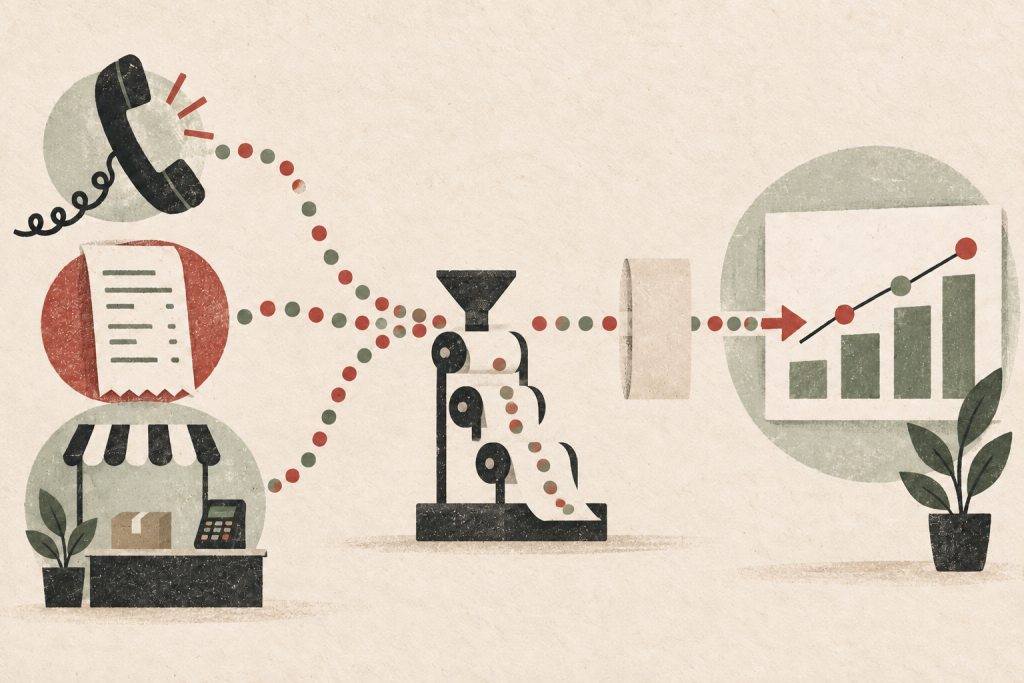
Map the route from the ad click to the business result. The website or call system records the inquiry. Your sales system records what happened next. A stable ID connects the two without somebody copying rows between spreadsheets every Friday.
Give one person ownership of that route. That person should know when a field changes, when an import fails, and when a location stops using the agreed definition. Google’s new diagnostics may flag technical problems. Your team still has to catch a business problem, such as a closed sale coded as an open lead.
Weber’s Measurement Foundation starts in the same order: establish the meters and the baseline before changing the marketing. Our published shows why. We installed analytics first, found where visitors got stuck, and then fixed those spots. Engaged users rose from 742 to 1,198 month over month during the documented six-month measurement period. That is one manufacturer’s result, not a promise for every account.
Test whether the connection improves a business decision
Run a contained test before using the new signal everywhere. Record the baseline. Check that imported results match the sales system. Compare qualified outcomes, revenue when it is dependable, cost per useful result, and the time it takes your team to maintain the connection.
Treat Google’s Data Strength Uplift Metric as a platform diagnostic, not a profit statement. If the dashboard reports more conversions but the sales team sees no improvement in qualified work, stop and investigate. Do not let a greener score settle the argument.
Already paying for search, display, or video? Weber’s managed Google Ads program covers the campaign, tracking, and weekly management. Tell us which sale or lead your ads need to produce. We will help you build a clean measurement handoff before asking automation to spend against it.
We used AI tools to help research and draft this article.