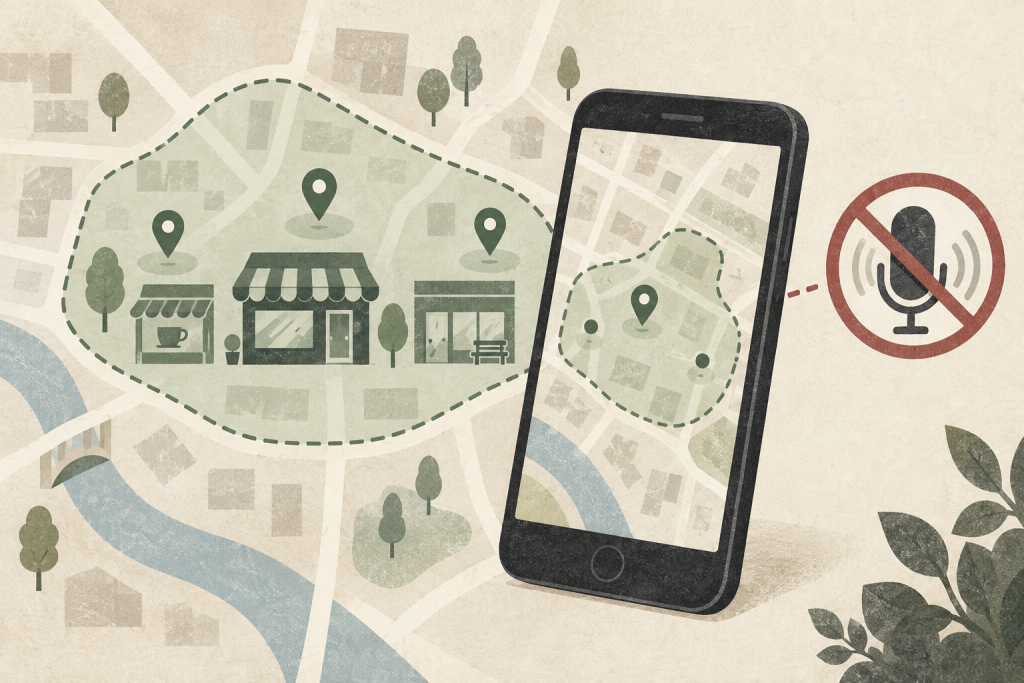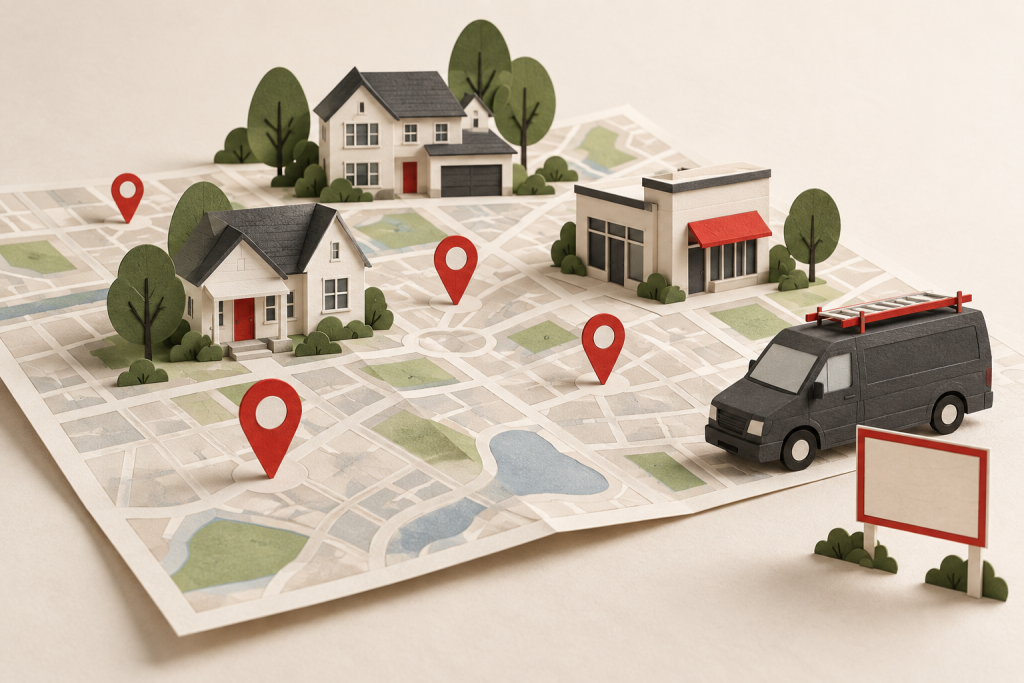
Your advertising territory should reflect where you can win good work and serve it well. Before you expand the radius on a construction or home-service campaign, check the job type, crew capacity, travel time, and proof you can show buyers in that area.
A September 1, 2026 report from the National Association of Home Builders is a useful reason to revisit the map. Its second-quarter findings describe continued pressure on single-family construction and differences between geographic markets, including a shift in market share toward outlying counties of smaller metros. That is national context, not evidence that any particular Lancaster-area town is booming. Read NAHB’s geographic housing update.
Which jobs and service areas should guide your advertising?
A general contractor, a commercial glass supplier, and an HVAC service company may cover the same county and need completely different campaigns. List the jobs you want, the jobs you can schedule, and the areas your crews can reach without turning half the day into windshield time.
Then look at your own recent inquiries. Which towns produce suitable projects? Where do estimates stall? Are you attracting homeowners when you need commercial decision-makers? National data can start the discussion. Your own pipeline should shape the decision.
Where should the ad send a prospective customer?
If the ad is about a particular service, the landing page should explain that service. Show the finished work, describe the problem it solved, and make the next step easy to find.
A useful project page can answer five questions without making the reader hunt:
- What kind of project was this?
- What did your team handle?
- What constraint made the work difficult?
- What can the buyer see in the finished result?
- How can someone discuss a similar job?
Use real project photography and approved details. Add location information when it helps establish relevant experience. Avoid making a stack of town pages that all say the same thing with a different place name.
Put the strongest work in front of the right buyer
Our shows how this can work for a specialist supplier. Weber rebuilt the website, established measurement, and supported it with direct mail, email, paid social, and video.
In one reported email campaign, 46% of clicks went to a project page, compared with 32% to the homepage. That result belongs to that campaign. It is a good reason to test specific project content with your audience, not a promise that your next email will behave the same way.
For a construction business, the practical version could be an approved project story sent to the people who specify or buy that kind of work. For a home-service company, it might be a service page supported by a targeted mailer, a truck wrap, and yard signs near completed jobs where permission allows.
Match the media map to the service map
Use a mapped mail plan when reaching households in selected routes fits the offer. Use a selected business audience when the buyer is a facilities manager or specifier. Check digital targeting settings against the areas you actually serve.
Keep the offer, phone number, and destination consistent across the pieces. Weber’s construction marketing services bring website work, print, signage, and campaign production together, so you do not have to coordinate a new vendor for each piece.
Review booked work, not just coverage
After launch, compare qualified inquiries and booked work by campaign and territory where you can identify the source. Watch whether the new area produces the right job size and whether you can serve it profitably. More dots on the map do not automatically make a better business.
Tell Weber where you want to grow and what you want to build. We will help connect the right proof, the right area, and a campaign your team can follow through on.
We used AI tools to help research and draft this article.