Digital & Web · We Get Stuff Done
When off-the-shelf software does not fit,
we build the web tool that does.
Custom software development in Lancaster, PA, built around how you actually work. Dashboards, internal tools, and store or member portals, shaped to your operation instead of the other way around.
- We build the tool around you. We start with two plain questions, what you want to put in and what you want to get out, then build exactly that, no bloated product to bend your business around.
- Real people build it, not a hand-off. In-house developers who talk like humans, explain what they are doing in plain words, and stay on the other end of the phone after it ships.
- It keeps growing as you do. You think of one more report or field, you tell us, we add it. No contract holds you here, we keep the work by being worth keeping.
The short answer
Does Weber build custom software, or just websites?
Both. Out of our Lancaster, PA shop, we do custom software development and web application work alongside websites, all of it shaped around your real operation. Think dashboards that pull your numbers into one screen, internal business tools that retire a tangle of spreadsheets, and member or store portals that do the thing your off-the-shelf product cannot.
We start by asking two plain questions: what do you want to put in, and what do you want to get out? Then we build exactly that, make it easy for your people to use, and keep developing it as your needs change. No jargon. No bloated product you have to bend your business around.
Sound familiar?
Two kinds of people usually end up on this page.
The one drowning in spreadsheets
The business outgrew the workbook two years ago, but the workbook is still running the show. One tab feeds another, a macro broke last spring, and only one person actually understands the whole thing. Every report is a manual copy-paste job that eats a morning. You are not running the business. You are babysitting a spreadsheet.
The one stuck with software that almost fits
It does most of what you need and then stops cold at the one thing that matters most to you. So you bolt on a workaround, then a workaround for the workaround, and you pay a monthly fee to be annoyed. The vendor's roadmap is not your roadmap, and the feature you actually need is never the one they build next.
If either one is you, keep reading. This is exactly what we build for.
Our approach
We build the tool around you, not you around the tool.
Most software is built for everybody, which means it is built for nobody in particular. You buy it, and then you spend the next two years bending your business to fit the product. Reports come out the way the software wants, not the way you think. Your team learns its quirks instead of doing their jobs.
Our approach is a bit unique. We build the tool around how you already work.
It starts with two questions, the same two we ask every time. What do you want to put in? What do you want to get out of it? Once we know that, we can have it all in one place, built your way. The fields are your fields. The screen shows the numbers you actually watch. The report comes out the shape you need it, the first time, without a copy-paste marathon.
And because we built it, we can change it. Off-the-shelf software changes when the vendor decides to change it, usually in a direction you did not ask for. Your tool changes when you need it to. That is the whole difference.
What we build
What does custom software development actually build for you?
Whatever the work needs. Custom software and custom web application development cover a lot of ground, so here are a few of the usual suspects.
- Dashboards. Your real numbers, pulled into one screen, updated on their own, so you stop hunting through five systems to answer one question.
- Internal tools. The thing that retires the spreadsheet: order tracking, job scheduling, inventory, approvals, whatever your team is currently doing by hand.
- Store and member portals. A login where your stores, members, or vendors do their part themselves, instead of emailing you and waiting. (See where our store-portal work lives: grocery and retail.)
- Ordering and request systems. Let people place an order, file a request, or book a slot without a phone call and a sticky note.
- Connections between the tools you already run. Make your systems talk to each other, so the same number does not get typed in three places.
If you can describe what you want it to do, we can usually build it. We never say no without a real reason.
Proof, not adjectives
What does this look like in real life? Ask Green Valley.
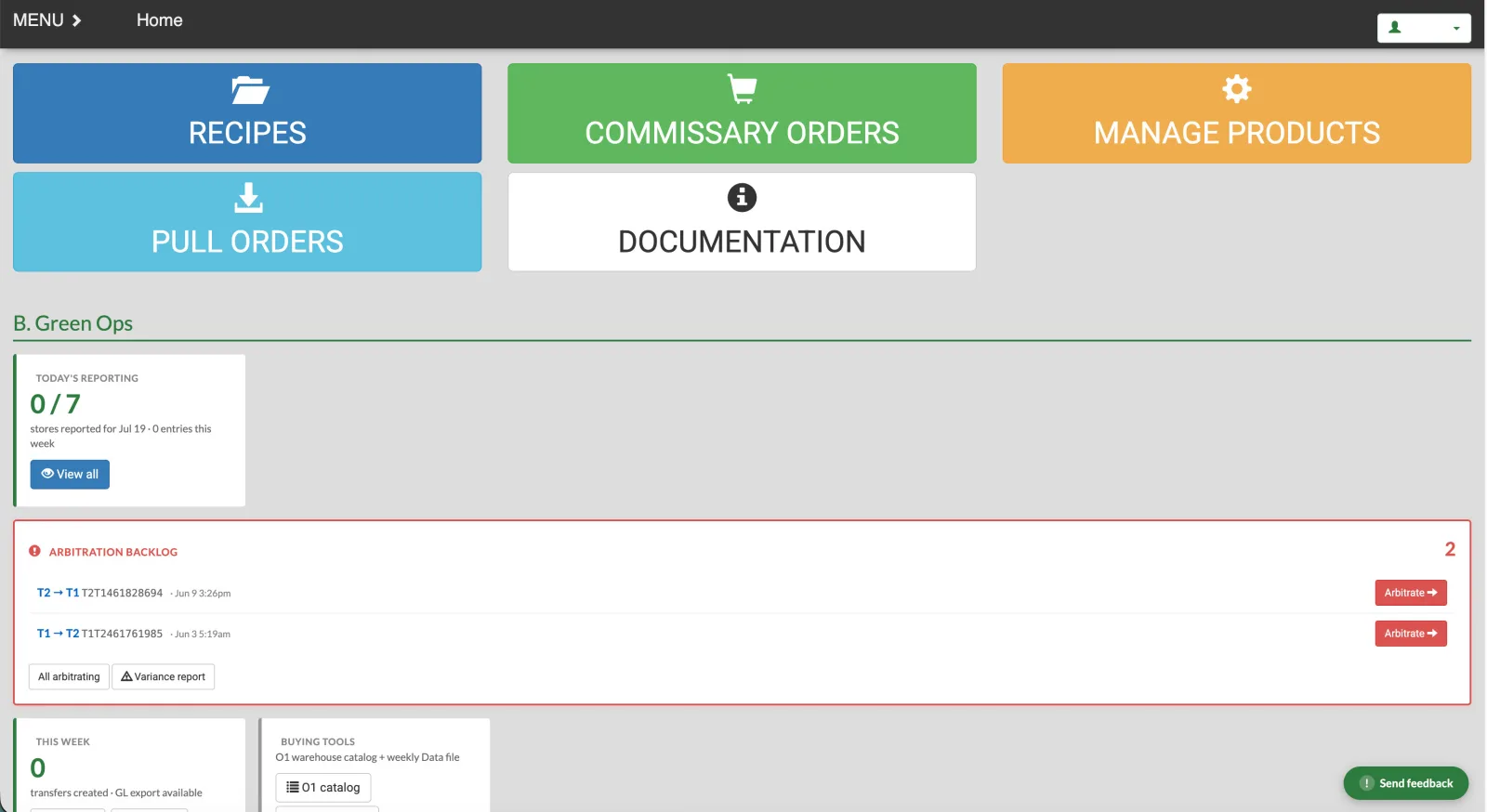
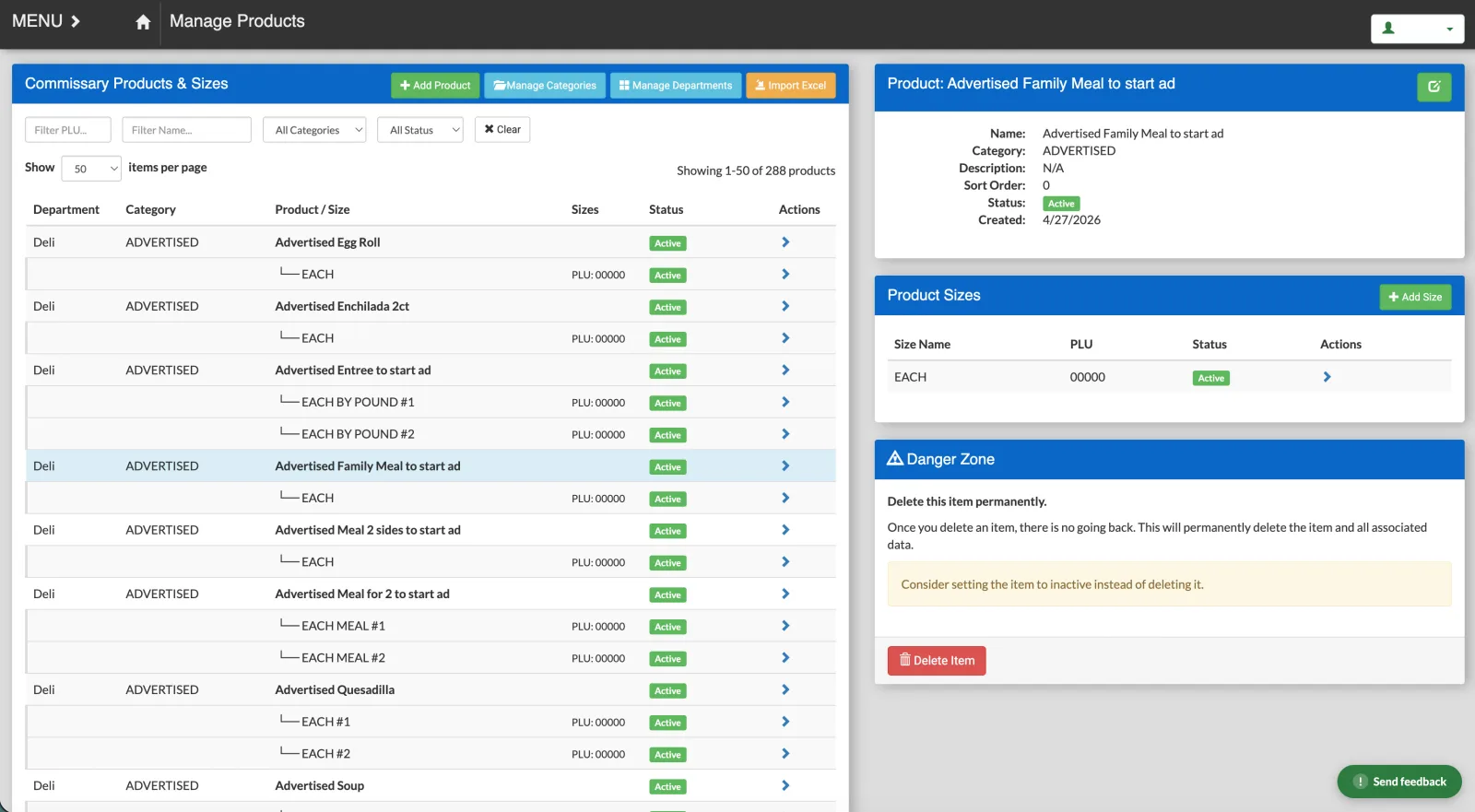
B. Green Co. runs Green Valley Marketplace, a Central PA grocer. They had a store operation that the off-the-shelf software could not quite hold, the kind of thing every store manager was tracking a little differently. So we sat down with Matt Battaglia and asked our two questions: what do you want to put in, and what do you want to get out?
Then we built it around the answers. One tool, shaped to how their stores actually run, with the inputs they care about and the outputs they need on screen. We built it to be easy for their people to use, because a tool nobody opens is just an expensive idea. When Matt showed it to his managers, they took to it right away. And he did not want to stop there. He came back with more pieces he wanted us to build.
That is how these usually go. We build the first version, your people use it, and then you start seeing all the other things it could do. We keep developing it with you, for as long as it keeps earning its place.
"This is pretty slick. I like it. I love that I could have a conversation with you. You just kind of get the business side of it. You get what it needs to do based on just a general description."
The people behind it
Will I understand what the developers are telling me?
Yes. That is half the reason clients stay.
A lot of people have sat through a software pitch, nodded along to a wall of acronyms, and walked out with no idea what they just agreed to. We do not do that to you. Our developers talk like people. They explain what they are building, why it works the way it does, and what it changes about your day, in plain words you can repeat to your team without a translator.
- You describe the business. We figure out the software.
- You do not need to know the first thing about code, databases, or how any of it works under the hood. You need to know your operation, and you already do.
- We handle the rest, and we keep you in the loop the whole way, in language that makes sense.
(If a developer ever buries you in jargon, tell us. We will translate, and we will have a word with them.)
The start of something bigger
What happens after the tool ships?
Version one is never the end. It is the part where you start seeing what else is possible.
Off-the-shelf software ships, and then you are on your own with it until the next forced update. A custom tool we build keeps growing with you. You think of one more report, one more field, one more thing it should handle. You tell us. We add it. Your business changes, and the tool changes to match, instead of becoming the thing holding you back.
That is the difference between buying a product and having a team. The people who built your tool are still on the other end of the phone, and they still remember why every piece works the way it does. Your operations person stops being the bottleneck and starts looking like the one who finally fixed it.
-
In-house
developers, not a hand-off
The people who scope your tool are the people who build it and the people who answer when you call. Nothing gets thrown over a wall to a vendor you never meet.
-
No contract
ever holds you here
You are not locked in for a year to find out if it works. You stay because the tool keeps earning its place, and because it is easy to pick up the phone.
-
Years
with the same clients
Some of the people we build for have been with us for decades. Software you keep improving is a relationship, and we have the long ones to show for it.
Keep looking
More from Digital & Web.
Websites & E-Commerce
New custom sites, online stores, and changes to whatever you already have, on any platform.
Explore websites & e-commerceSEO & GEO
Get found by people on Google and cited by the AI assistants when a buyer asks them who to hire.
Explore SEO & GEOSocial Media
Content, a posting calendar, and real engagement, in the same voice as everything else you put out.
Explore social mediaAll Digital & Web
The whole digital team in one place: web, software, SEO, social, and email, tied to the print we already make for you.
Back to the hubOr head somewhere else