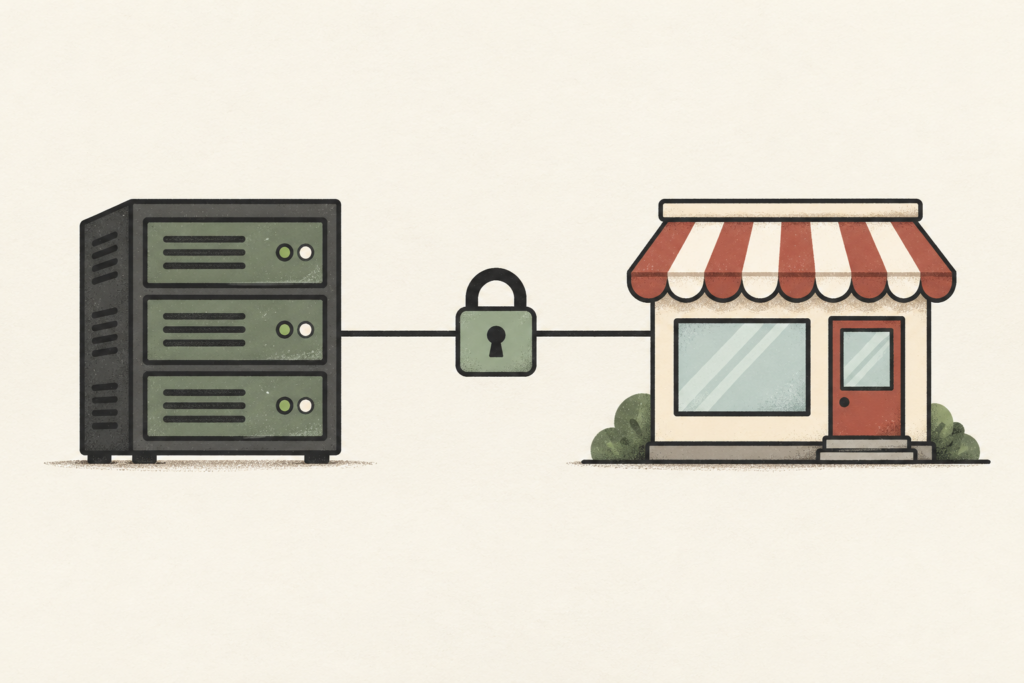
Do not increase your holiday ad budget just because a national forecast says sales should grow. Use the forecast to confirm that demand may be there. Then make the budget earn its next dollar with your own sales, inventory, margins, customer traffic, and campaign results.
This decision needs attention now. On October 15, the National Retail Federation forecast 2026 holiday retail sales will grow 4.2% over 2025. NRF defines that holiday period as November 1 through December 31. The same day, the U.S. Census Bureau released its September advance estimate, showing retail and food-services sales up 0.8% from August and 6.3% from September 2025.
Those are national figures. They are not a sales goal for your store. Census also notes that its estimates are not adjusted for price changes. A growing total can still hide big differences by category, location, and customer budget.
Start with the extra sale you can actually handle
Before you add money, name the sale you want. More store visits? More online orders? A stronger week for one department? Movement on inventory that needs to be gone by January?
Then check the business behind that goal:
- Which products have enough inventory and margin to support promotion?
- Which locations need traffic, and which are already near capacity?
- Can your website, phone team, and store staff finish the sale?
- What result will tell you the next dollar was worth spending?
A positive forecast does not fix an out-of-stock item, a weak offer, or a checkout problem. Get those pieces straight first.
Build one holiday plan, not a pile of ads
Your customer does not see channels. They see one store. The paid social ad, search result, email, postcard, window sign, and shelf display should carry the same offer, dates, and next step.
Need every channel? No. Choose the few that fit the buyer and the job. Search can meet someone already looking. Social and video can introduce the offer. Direct mail can reach a useful local audience. Store signage can finish the message where the buying decision happens.
Weber’s media buying team plans, places, and reconciles campaigns across digital, broadcast, print, outdoor, and mail. The same shop handles digital and web work plus printing and signage. That matters when the sale changes on Tuesday and every customer touchpoint still has to agree by Friday.
Hold back money for what proves itself
Do not lock the whole budget into one guess. Fund the base plan. Keep a portion available for the products, locations, audiences, or creative that show useful results.
Set the rules before launch. For an online offer, watch completed orders, margin, pickup choice, and returns. For a store campaign, look at promoted-item sales, traffic where available, coupon use, or another result your team can verify. A click is information. It is not automatically a sale.
Check early enough to act. If one location sells through inventory, stop pushing what it cannot fulfill. If a strong offer is producing profitable orders, move the held budget while there is still time. If the handoff is broken, fix it before buying more attention.
Use the forecast as context, not permission
NRF’s forecast says consumers may keep spending while remaining careful with their budgets. That makes a clear value story important. It does not mean every retailer should discount more or spend more.
Your better move is a controlled plan: one business goal, one consistent offer, a few channels with defined jobs, and money reserved for evidence. That gives you room to respond without betting the season on a national average.
Bring Weber your holiday goal, locations, inventory priorities, budget, and deadline. Talk to a strategist, and we will turn them into one plan your media, website, print, and store can run together.
We used AI tools to help research and draft this article.