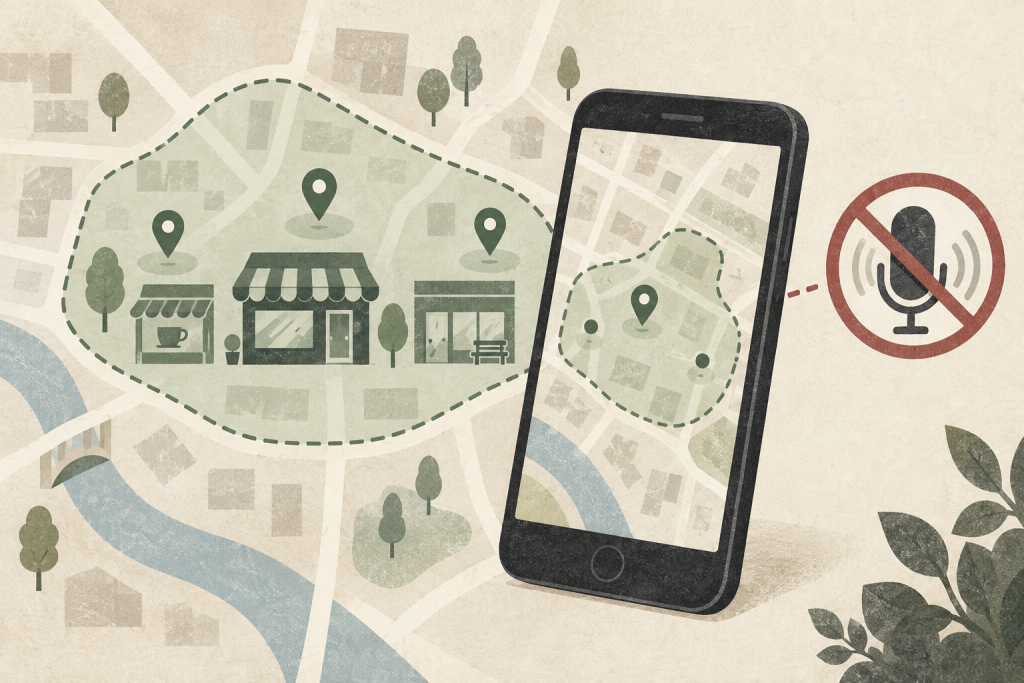
No. If an ad vendor says it can target people by listening to private conversations, stop and ask for proof before you spend a dollar. A legitimate media plan should tell you what data it uses, how people enter the audience, what consent applies, and what the reporting can actually prove.
That question matters now. On August 27, 2026, the Federal Trade Commission finalized orders involving three firms that had promoted an AI-powered “active listening” advertising service. The FTC alleged that the service was not based on voice data and that consumers had not opted into the targeting described. The orders prohibit misrepresentations about the service, voice-data collection, consent, and geographic targeting.
You do not need to become a privacy lawyer to buy media. You do need straight answers.
What does legitimate geofencing actually do?
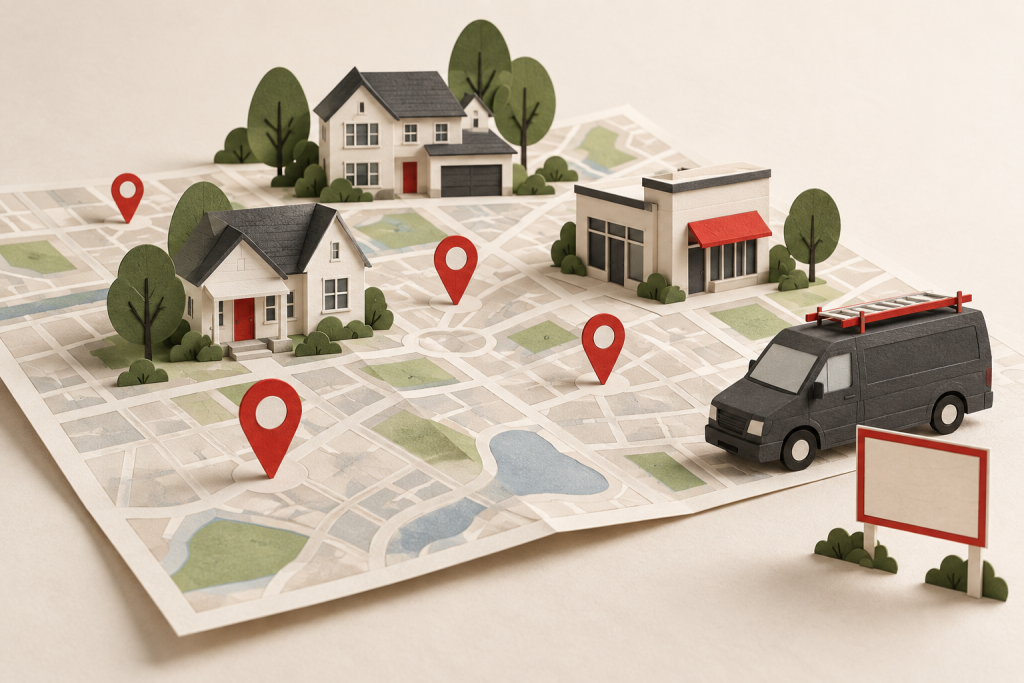
Geofencing starts with a place, not a private conversation. A media team draws a digital boundary around a location where a useful audience is likely to be. That might be a trade show, a campground, a competitor’s location, or a neighborhood inside your service area. Eligible devices that cross the boundary can later receive ads through participating apps and ad inventory.
That is how Weber describes its public geofence conquesting program. We choose and draw the targets, design the display ads, run the media buy, and report the results. No claim about overheard kitchen-table conversations is required.
Geofencing is not mind reading. It is an audience and placement decision built around location signals and the rules of the platforms involved.
Ask four questions before you approve the buy
A flashy sales pitch can make targeting sound more precise than it is. Bring it back to four plain questions:
- What puts someone in the audience? Ask whether the trigger is a location visit, a website action, a customer list, a content interest, or something else.
- Where does that data come from? Get the platform, provider, and data category in writing. “Our AI finds them” is not an answer.
- What permission applies? Ask how consent and opt-out choices are handled. If a vendor claims to collect sensitive information, do not accept a shrug.
- What will the report prove? Impressions can show delivery. Clicks can show engagement. Neither one automatically proves a sale, an account opened, or a booked job.
If the answers keep changing, so should your vendor.
Match the promise to a number you can inspect
Every targeting claim needs a measurement plan. If the promise is precise reach, review the locations, dates, eligible audience rules, impressions, and frequency. If the promise is website response, use a dedicated landing page and clean analytics. If the promise is sales, plan a defensible connection to inquiries or transactions before launch.
Weber’s published geofencing examples report impressions and click rate, and the page says exactly where that proof stops. Those figures show reach and engagement. They do not, by themselves, prove money at the register. That is why our media buying team plans the buy, confirms it ran, checks the invoice, and puts the results in one plain-language report.
What should you do with your next proposal?
Circle every claim that sounds unusually powerful. Ask what data makes it possible, what permission supports it, and which report will verify it. Keep the answer with the approved media plan. That short review can save you from paying for a story that the vendor cannot substantiate.
Already looking at a geofencing proposal? Send Weber the audience, territory, goal, and budget. We will tell you what we would target, what we would measure, and where the limits are. Straight answers first. Then we get the media working.
We used AI tools to help research and draft this article.